From Iron to the Ice: Cross-Training for Hockey Players
Modified: 04/01/2026 01:54 PM · Luke Pajer
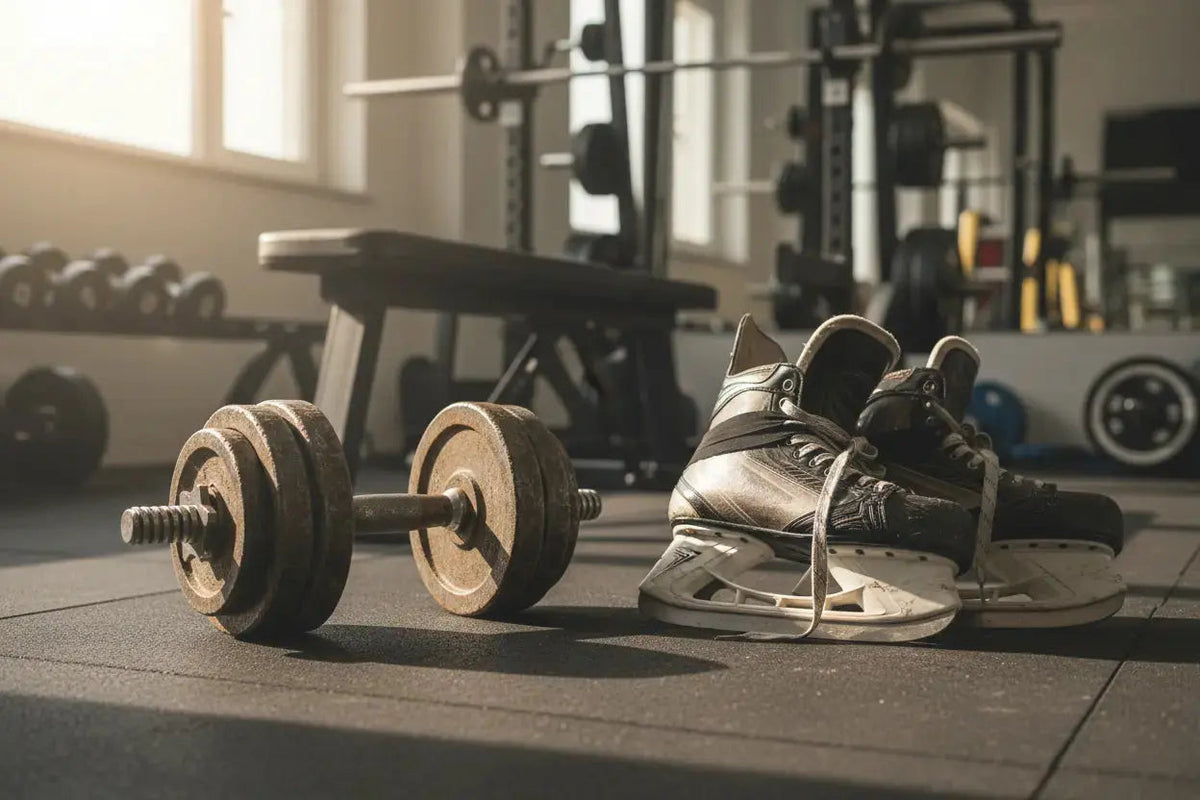
Hockey demands a unique combination of power, endurance, agility, and toughness. The best way to develop these qualities? Get off the ice and into the weight room. Cross-training isn't optional for serious hockey players—it's essential.
The most effective players in any league, from beer league to the NHL, complement their ice time with dedicated gym work. The right training program builds the strength to win puck battles, the power to accelerate past defenders, and the conditioning to dominate third periods.
Building Hockey-Specific Strength
Hockey strength isn't just about moving heavy weights. It's about generating power from skating positions, absorbing contact without losing balance, and maintaining strength through fatigue.
Lower body training should emphasize single-leg work. Skating is essentially a series of single-leg explosions. Bulgarian split squats, single-leg deadlifts, and lunges develop the unilateral strength that powers acceleration and cornering.
Hip strength often gets overlooked. The lateral explosiveness that drives skating comes from powerful hip abductors and adductors. Cable work, band walks, and Copenhagen planks build these crucial muscles.
Core work should focus on anti-rotation. Hockey players constantly fight forces trying to twist them off balance. Pallof presses, cable rotations, and asymmetric carries develop the core stability to stay strong through contact.
Ready to embrace the brutality? Shop gear built for those who work until something breaks.
Shop Now →Power Development
Strength means nothing without the ability to express it quickly. Power training bridges the gap between gym strength and on-ice performance.
Olympic lift variations—cleans, snatches, and their derivatives—develop explosive hip extension. If you don't have coaching on these movements, box jumps and medicine ball throws offer similar benefits with lower technique requirements.
Kettlebell swings are particularly valuable for hockey players. They develop hip power in a pattern that mimics the skating stride while building grip strength and posterior chain endurance.
Conditioning That Transfers
Hockey conditioning should mirror the sport's demands: short bursts of maximum effort followed by incomplete recovery, repeated throughout a game.
Interval training beats steady-state cardio for hockey preparation. Work-to-rest ratios similar to shift patterns—30 to 45 seconds of work followed by four to five times that rest—develop sport-specific endurance.
Assault bikes and ski ergs are excellent tools. They demand full-body effort without the joint stress of running, allowing hard conditioning work without compromising recovery.
Ready to embrace the brutality? Shop gear built for those who work until something breaks.
Shop Now →Recovery Matters
Physical laborers face additional recovery demands. A hard gym session plus a physical job plus practice means significant total stress on your body. Programming must account for this.
Sleep is the ultimate recovery tool. Prioritize it above supplements, foam rolling, and everything else. Eight hours should be the goal, especially during heavy training phases.
Mobility work keeps you moving well. Hip flexors, thoracic spine, and ankles deserve special attention. Brief daily routines beat occasional lengthy sessions.
Putting It Together
Two to three lifting sessions per week is sufficient for most players balancing hockey with work and life. Focus on compound movements that deliver maximum benefit for time invested.
Train hard during the off-season when ice time is limited. Maintain strength during the season when hockey takes priority. This periodized approach keeps you fresh when it matters.