Why Tradespeople Make the Best Hockey Players
Modified: 04/01/2026 01:54 PM · Luke Pajer
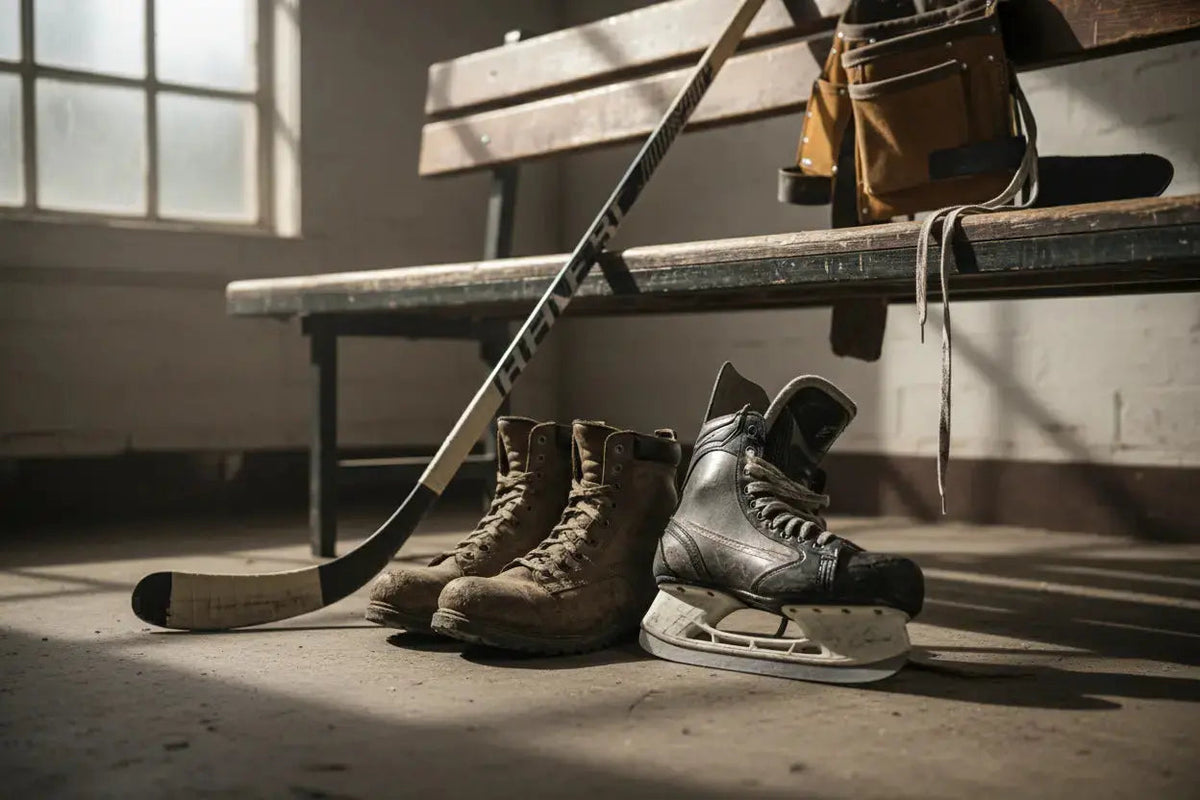
Walk into any beer league locker room and count the work boots. Talk to the players about their days and you'll hear about job sites, service calls, and project deadlines. The trades are wildly overrepresented in recreational hockey, and it's not a coincidence.
The qualities that make someone successful in skilled trades translate directly to the ice. This crossover isn't accidental—it reflects deep alignment between two demanding pursuits.
Work Ethic Transfers
Tradespeople learn early that showing up is non-negotiable. Jobs don't complete themselves. Problems don't fix themselves. You show up, you work, you finish. This mentality defines their approach to everything, including hockey.
The player who never misses practice, who plays through minor discomfort, who does the unglamorous work that wins games? Check their day job. Odds are good they're used to demanding physical work with no room for excuses.
This work ethic appears in conditioning too. When you spend eight hours doing physical labor, additional gym time requires real dedication. Yet trades workers consistently put in the extra work because half-effort isn't in their programming.
Ready to embrace the brutality? Shop gear built for those who work until something breaks.
Shop Now →Physical Preparation
Construction workers, electricians, plumbers, and other trades professionals maintain baseline fitness just doing their jobs. They're constantly lifting, carrying, climbing, and moving. Their bodies are adapted to physical demand.
This conditioning advantage shows in late games. While office workers who play hockey are sucking wind in the third period, trades workers have reserves built through daily physical labor. Their bodies know how to work.
Grip strength developed from tool use translates to stronger stickhandling and puck control. Core stability from awkward lifting positions helps with balance through contact. The physical demands of trades work build hockey-relevant fitness almost accidentally.
Problem-Solving Mindset
Skilled trades require constant problem-solving. Things don't go according to plan. Situations change. You adapt, figure it out, and move forward. This mentality is exactly what hockey demands.
The player who reads the play developing, adjusts to unexpected situations, and makes smart decisions under pressure is using the same mental skills they use at work. Trade workers are trained to think on their feet, and that training shows.
They're also comfortable with failure as part of the learning process. In trades, mistakes happen. You fix them and move on without ego collapse. This resilience helps with the inevitable errors that hockey involves.
Ready to embrace the brutality? Shop gear built for those who work until something breaks.
Shop Now →Team Orientation
Job sites run on cooperation. You depend on other trades to do their work so you can do yours. You help when someone's struggling because the project needs to move forward. Individual glory is meaningless if the job doesn't get done.
This translates to hockey's team dynamics. The trades player naturally understands their role, supports teammates, and prioritizes team success over personal statistics. They've practiced this mindset every working day of their careers.
Locker room culture on construction sites and in hockey rooms share remarkable similarities. The humor, the hierarchy, the way problems are addressed—it's familiar territory.
Toughness
Both environments reward toughness. In trades, you work through discomfort, weather, and fatigue because the job requires it. In hockey, you play through pain because the team needs you.
This isn't about ignoring serious injuries. It's about the mental fortitude to push through when things get hard. Trades workers develop this capacity daily, and it serves them on the ice.
The intersection of these worlds—hard work and hard play—defines a particular kind of person. Someone who embraces the brutality of both.